The right box does more than hold a product. It needs to protect what is inside, withstand handling and transportation, fit efficiently in storage and shipping environments, and sometimes represent your brand when it reaches the customer.
That is why custom corrugated boxes can be a practical choice for businesses that need packaging designed around their products rather than forcing products into standard box sizes.
Whether you ship manufactured components, consumer products, electronics, food and beverage items, or retail goods, your packaging requirements can vary significantly. Product weight, dimensions, fragility, shipping conditions, quantity, and presentation all play a role in determining the right packaging.
Choosing the right corrugated packaging starts with understanding what your product actually needs.
Why Custom Corrugated Boxes Matter
Standard boxes can work for some applications, but they are not always the most efficient solution. A box that is too large may allow a product to move around during transportation. A box that is too small may put unnecessary pressure on the product or make packing difficult.
Custom corrugated boxes are manufactured according to specific product dimensions and requirements. This allows businesses to consider the product itself, how it will be packed, how it will be transported, and how it should arrive at its destination.
Properly designed custom cardboard boxes can also help create a more consistent packing process. When the box is designed around the product, employees may spend less time adjusting or modifying packaging during fulfillment.
For businesses shipping products regularly, these details can have an impact on efficiency, protection, and the overall customer experience.
1. Start With Your Product Dimensions
One of the first things to consider when selecting packaging is the actual size of the product.
Measure the product’s length, width, and height. If the product has irregular shapes or components that extend beyond the main body, those should also be considered during packaging design.
The goal isn’t necessarily to create the smallest possible box. Instead, the packaging should provide an appropriate amount of space for the product and any required protective materials.
Oversized packaging can create unnecessary empty space, while undersized packaging may make loading difficult. A properly engineered box balances product fit with protection and handling requirements.
This is one reason working with a corrugated box manufacturer can be helpful. Rather than selecting from predetermined dimensions, businesses can discuss the actual product specifications and develop packaging around them.
Consider Product Weight
Product weight is another important factor.
A lightweight consumer product and a heavy industrial component should not automatically use the same type of box. Heavier products may require stronger board grades, reinforced construction, or additional interior support.
When evaluating shipping boxes, consider not only the weight of the product itself but also the weight of the finished package and how it will be handled.
Packaging may be stacked, moved between facilities, loaded onto trucks, or handled multiple times before reaching its destination. The box needs to be appropriate for those conditions.
A packaging manufacturer can evaluate the product’s weight alongside its dimensions and shipping environment to help determine an appropriate construction.
3. Think About How the Product Will Be Shipped
Your distribution process matters just as much as the product.
Ask how the package will move from your facility to the customer. Will it be shipped individually? Will it travel through a distribution center? Will multiple boxes be stacked together? Will the package be transported locally or across the country?
These factors influence packaging requirements.
For example, a product that travels through multiple handling points may need additional protection compared with something delivered directly from one facility to another.
Effective corrugated packaging should account for the realities of the supply chain instead of focusing only on how the box looks when it leaves the warehouse.
Determine How Much Protection Your Product Needs
Not every product requires the same level of protection.
Fragile products may need foam inserts, pads, partitions, or other interior components to prevent movement and absorb impact. Products with sensitive surfaces may require additional separation to reduce scratching or contact damage.
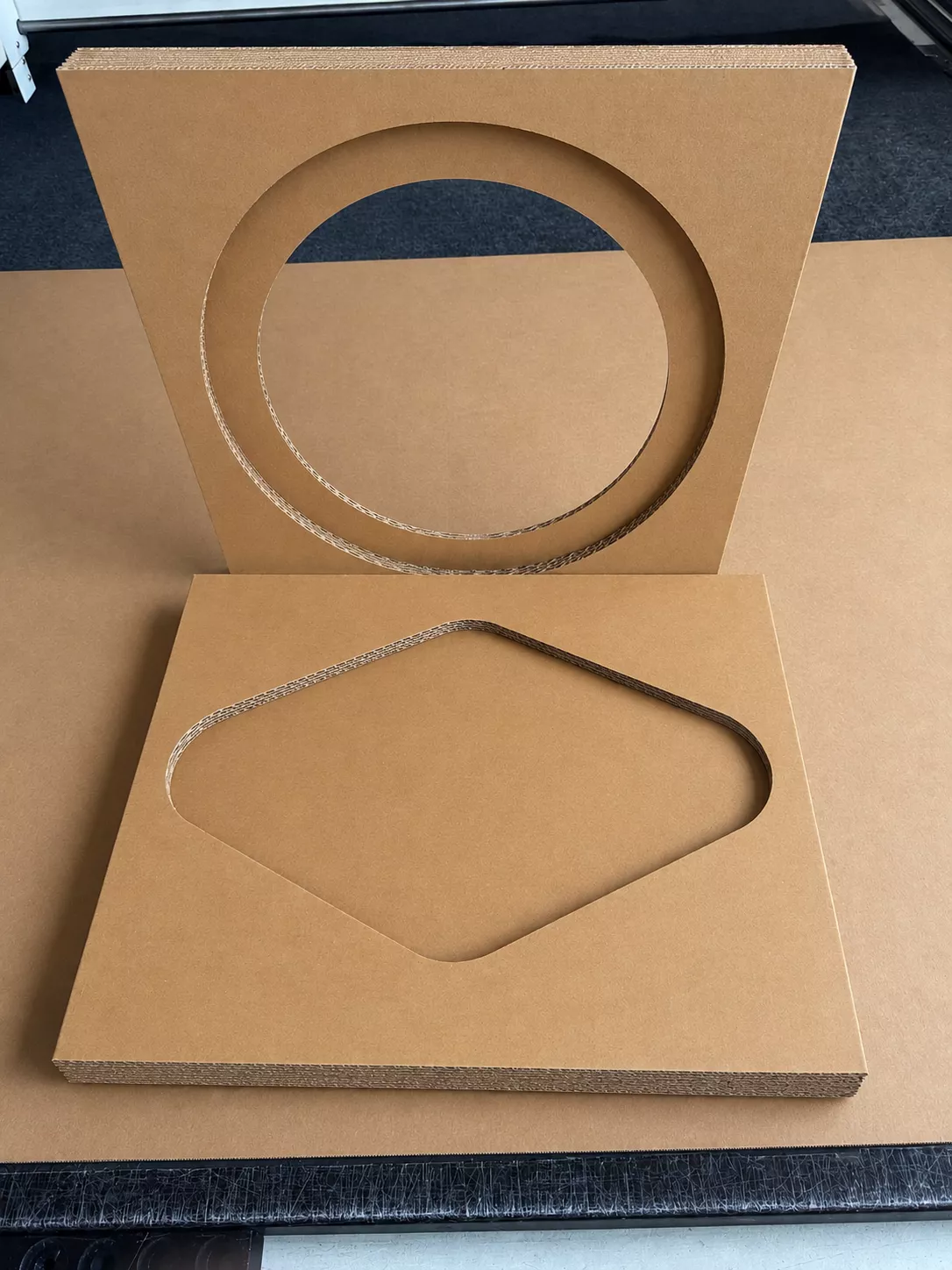
For products that need additional protection, custom packaging solutions can combine a corrugated box with purpose-built interior components.
This could include foam inserts, built-up pads, chipboard partitions, edge protection, or other protective packaging components.
The objective is simple: keep the product stable and protected throughout its journey.
5. Choose the Appropriate Board Strength
Corrugated boxes are available in different material constructions and strengths. The appropriate option depends on the application.
Factors such as product weight, box dimensions, stacking requirements, handling conditions, and transportation environment should all be considered.
Using a stronger material isn’t automatically the right answer for every application. The goal is to match the packaging construction to the product and its supply chain.
An experienced corrugated box manufacturer can help evaluate these factors and recommend an appropriate packaging construction based on the specific application.
6. Consider Interior Packaging
Sometimes the box itself isn’t enough.
Products can move inside a package during transportation, creating opportunities for impact, shifting, or damage. Interior packaging can help stabilize the product and create separation between components.
Depending on the application, custom cardboard boxes can be paired with:
- Foam inserts
- Corrugated pads
- Built-up pads
- Chipboard partitions
- Interior supports
- Edge protection
The right combination depends on the product’s shape, fragility, weight, and shipping environment.
Good product packaging considers both the exterior container and what happens inside it.
7. Consider Your Packaging Volume
Your required quantity should also influence the packaging approach.
Some businesses need a relatively small number of boxes for a new product, replacement packaging, or a specialized application. Others require packaging continuously at high volumes.
Finding a manufacturer that can accommodate your production requirements can make purchasing and planning easier.
Superba Packaging LLC produces packaging for both short runs and high-volume requirements, including orders reaching 1 million units or more. This allows businesses to discuss packaging requirements based on their actual production needs rather than being limited to one volume category.
8. Don’t Forget Branding
Packaging can also play a role in product presentation.
For products sold through retail or e-commerce channels, the package may be one of the first physical interactions a customer has with your brand.
Depending on your requirements, packaging can incorporate printed elements, labels, litho-laminated components, or custom retail displays.
Branded product packaging can help create a more consistent presentation while still providing the structural protection needed during transportation.
The best approach depends on whether your priority is primarily shipping protection, retail presentation, or a combination of both.
9. Work With a Manufacturer That Can Engineer the Solution
Selecting packaging isn’t simply about ordering a box in a particular size. The right solution requires consideration of the product, materials, protection requirements, production volume, and supply chain.
Working directly with a corrugated box manufacturer gives businesses the opportunity to discuss these requirements before production begins.
At Superba Packaging LLC, the process begins with understanding the product and its requirements. Specifications are reviewed, a packaging solution is developed, and designs or samples can be evaluated before manufacturing.
This approach helps businesses move from a general packaging requirement to a solution built around the actual application.
Custom Packaging Solutions for Different Industries
Different industries have different packaging challenges.
Manufacturers may need durable packaging for components and equipment. E-commerce businesses may prioritize product protection and efficient shipping. Retailers may need packaging that combines protection with presentation.
Electronics can require interior cushioning and separation, while industrial equipment may require stronger construction and additional structural support.
This is where custom packaging solutions can provide flexibility. Instead of applying one packaging format to every product, the packaging can be developed around the specific requirements of each application.
Common Mistakes to Avoid When Choosing Packaging
One of the most common mistakes is choosing packaging based solely on price.
The lowest upfront packaging cost doesn’t necessarily represent the lowest overall cost if products arrive damaged, packing takes longer than expected, or boxes fail during handling.
Another mistake is choosing a box based only on product dimensions without considering weight, interior protection, stacking, and transportation.
Businesses should also avoid waiting until the last minute to address packaging requirements. Proper packaging design may involve specifications, prototypes, approvals, production scheduling, and delivery coordination.
Starting the process early gives manufacturers and customers more time to evaluate the solution.
When Should You Consider Custom Corrugated Boxes?
Custom corrugated boxes are worth considering when standard boxes don’t adequately address your product or operational requirements.
They may be especially useful when you have:
- Unusual product dimensions
- Heavy or fragile products
- Specialized shipping requirements
- Multiple components that need separation
- High-volume packaging needs
- Retail presentation requirements
- Frequent product damage during shipping
- A need for consistent packaging dimensions
If your current packaging is routinely oversized, difficult to pack, or failing to protect products adequately, it may be time to review your packaging design.
How Superba Packaging Can Help
Superba Packaging LLC has manufactured custom packaging solutions since 2001. The company provides custom corrugated boxes, protective packaging, foam inserts, pads, built-up pads, chipboard components, V-board edge protection, industrial stitching, litho labels, and retail displays.
Each project is approached around the customer’s product requirements, material needs, production quantity, budget, and timeline.
Whether you need a short production run or high-volume packaging, the goal is to develop a practical solution that fits your operation.
For businesses looking for shipping boxes, protective packaging, or branded packaging, working with an experienced manufacturer can make the process more straightforward.
Frequently Asked Questions
What are custom corrugated boxes?
Custom corrugated boxes are boxes manufactured to specific product dimensions, material requirements, structural needs, and production quantities. They can be designed for shipping, product protection, storage, retail presentation, or a combination of these purposes.
What is the difference between custom cardboard boxes and standard boxes?
Standard boxes are manufactured in predetermined sizes and configurations. Custom cardboard boxes are produced according to specific requirements, allowing businesses to account for product dimensions, weight, protection needs, and presentation.
How do I choose the right corrugated packaging?
Start by evaluating your product’s dimensions, weight, fragility, shipping environment, stacking requirements, and production volume. An experienced manufacturer can then help determine the appropriate construction and protective components.
Can custom packaging help protect products during shipping?
Yes. Properly designed packaging can help reduce product movement, impact, crushing, and other common sources of shipping damage. Interior components such as foam inserts, pads, partitions, and edge protection can provide additional protection when needed.
How many custom boxes can I order?
Production quantities depend on the manufacturer and project requirements. Superba Packaging LLC supports both short-run and high-volume production, including quantities of 1 million units or more.
Can custom packaging include branding?
Yes. Depending on the application, packaging can incorporate printed elements, litho labels, litho-laminated components, and retail displays for branded product presentation.
Why should I work with a corrugated box manufacturer?
A corrugated box manufacturer can evaluate your product specifications and help develop packaging based on dimensions, weight, protection requirements, shipping conditions, and production volume rather than simply supplying a standard box.
Conclusion
Choosing the right packaging starts with understanding what your product actually needs. Dimensions, weight, fragility, transportation, production volume, interior protection, and presentation should all be considered before selecting a box.
Custom corrugated boxes provide businesses with the flexibility to build packaging around those requirements. From straightforward shipping cartons to protective and branded packaging systems, the right design can support product protection and a more efficient packing process.
If your current shipping boxes aren’t providing the fit, protection, or functionality your business needs, it may be time to explore custom packaging solutions.
Superba Packaging LLC can help you evaluate your requirements and develop packaging built around your product, whether you need a short run or high-volume production.